
The ancient region of Gandhara
Initiating a research project on a collection of artifacts from Gandhara in a German mission museum raises essential questions. Firstly, what exactly is Gandhara? Where is it located, and why hasn’t it gained more attention before? Additionally, how is it related to Buddhism? These questions are intriguing, and answering them can be challenging due to Gandhara’s extensive history filled with culture, history, and religion. Nonetheless, these questions will be addressed on the following pages.
The ancient region of Gandhara, situated in present-day northwest Pakistan and northeast Afghanistan, held a significant place in history. Its geographical location along the Silk Road, connecting to China, South Asia, and the Mediterranean, contributed to its prosperity, in addition to possessing rich agricultural plains.
The historical importance of this region is underscored by its early mentions in religious texts like the Mahabharata, one of the two Hindu epics containing more than 100,000 verses, and references by famous Chinese pilgrims such as Faxian and Xuanzang. Its geographical boundaries were naturally defined by the Hindu Kush mountain range to the west, the Indus River to the east, the city of Peshawar, and its basin opening onto the plains to the south, and to the north, the ancient region of Udyana with the Swat Valley. Beyond the Hindu Kush lay the ancient region of Nagarahara, with Bactria to its northwest. Together, these regions, including Gandhara, form what scholars sometimes refer to as “Greater Gandhara.” Although interconnected in their development, they maintained a degree of independence. (“Remembering Pakistan’s Buddhist past.” Arshad Awan. T-Magazine. Web. 06 Nov 2023. [https://tribune.com.pk/story/2361090/remembering-pakistans-buddhist-past])
It is through these geographical distinctions that we categorize art from Greater Gandhara, including pieces from the ancient Peshawar Basin, the Swat Valley, and Afghanistan. (Pons, 2019, p. 4.
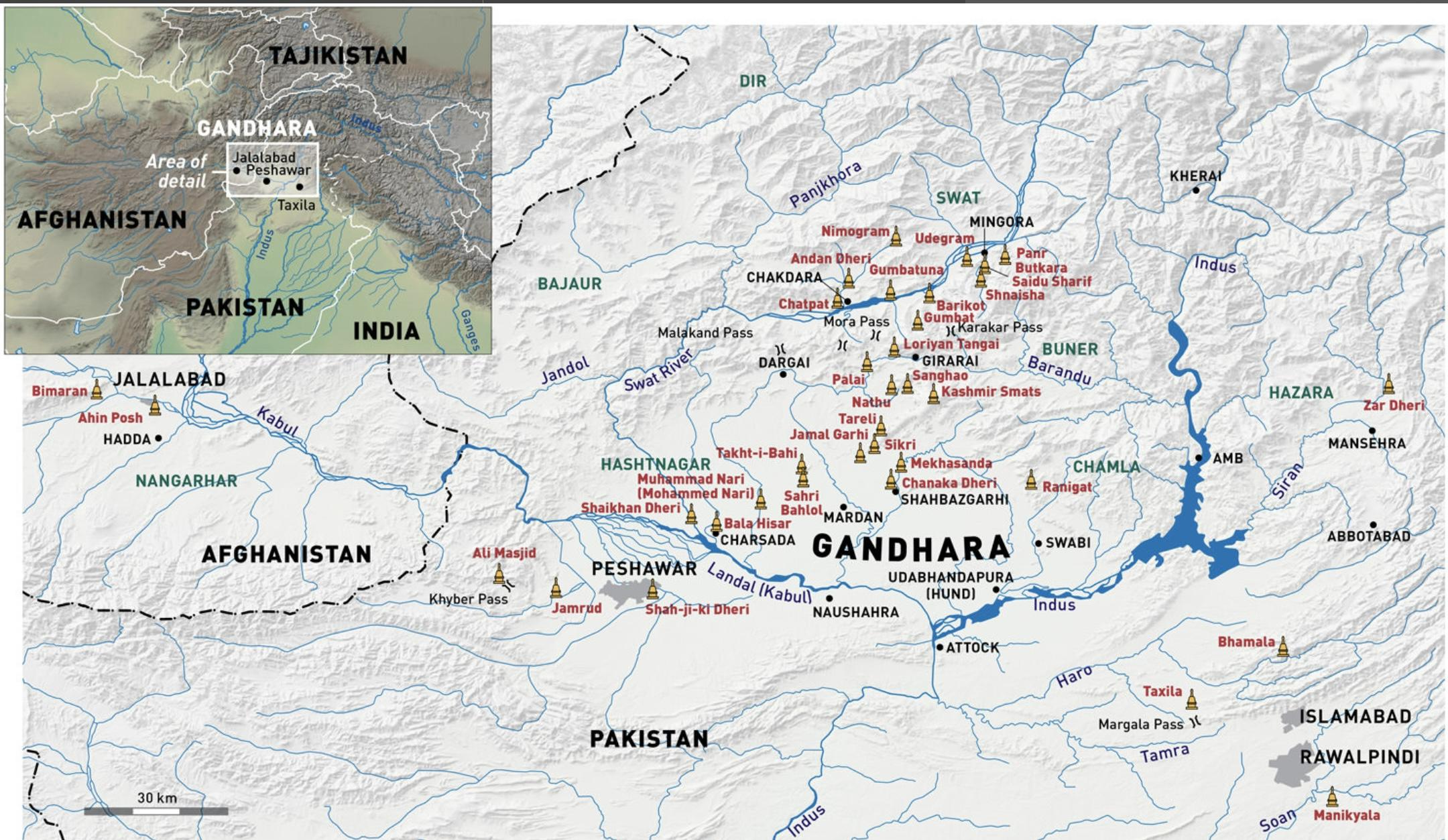 Map of Gandhara
History of buddhism in Gandhara
To delve into Gandharan Art, it is essential to start with a brief overview of Buddhism’s history in the region of Gandhara.
The first mention of Gandhara has already been in the 9th century B.C as mentioned in the vedic Rigveda.
In ancient Gandhara, the invasion of Alexander the Great between 331 and 327 B.C of Gandhara and Northwest India left an early influence of Buddhist art, which was kept up still 300 years later. (Falser, 2015, p. 3)
Followed by the Mauryan Empire, King Ashoka in the 3rd century B.C was a major supporter of Buddhism, which led to the the establishment of Buddhism and its first Buddhist sites, although they initially lacked religious imagery. A total of six stupas have been built by him. (Falser, 2015, p. 9)
Notably, the oldest written Buddhist text were written in Gandhara in the 1st. century B.C in the local Gandhari language. These were later brought to China via the silk road, and therefore te regionof Gandhara seems to have played an important role in the diffusion of Buddhism thorugh east-central Asia. (Heirmann; Bumbacher, 2007, p. 57)
The 1st century A.D saw the emergence of Buddhist sculptures, coinciding with the peak of the Kushan Dynasty from the 1st to the 3rd century A.D., who weren’t Buddhists themselves, but Zoroastrians. They were tolerant towards all religions of their conquered areas reaching up to North India, and even actively encouraged the making of Buddhist art.
There’s evidence from this period for different Buddhist schools in Gandhara, as the Sarvastivada, Mahasamghika and Dharmaguptaka, and there is also material and textual scripts proving that Mahayana was practised in Gandhara, though only by a small minority since Mahayana only turned into a larger-scale movement in the 4th century.
The most prosperous era for Gandhara occurred from the 3rd to the 5th century A.D, marked by the production of iconic sculptures.
However, from the 5th to 6th century A.D the Huns took control of Gandhara, leading to a decline in patronage for Buddhist sacred areas. Despite this decline, older sculptures continued to be used by Buddhist communities. Still, from there on Buddhism declined from the region and most Buddhist sites were deserted, until the conquest of Gandhara by Mahmud of Ghazni in the 11th century took place and finalized this process. (Heirmann; Bumbacher, 2007, p. 61)
In the region of Afghanistan, Buddhism thrived in tandem with local communities from the 4th to the 8th century A.D. An extraordinary development occurred between 550 and 600 A.D when monumental Buddhas were constructed in Bamiyan, which was an important Buddhist site until the 7th century visited by pilgrims even coming from East Asia.
Nevertheless, the 8th to 9th century A.D marked the end of the Buddhist tradition here as well, finalized in the 14. century by the muslim invasion of the Indian subcontinent since the 12th century. (Hartmann, 2004, p. 37)
Buddhism in Gandhara today
Buddhism in Gandhara has, over time, essentially diminished. In Pakistan, where 94% of the population is Muslim, religious minorities, including Hindus, face oppression. It’s unsurprising that in 2017, only 1884 Buddhists were reported in Pakistan, with the country hosting just one Buddhist temple in Islamabad, primarily used by visiting Buddhists from abroad. (Imtiaz Ahmad: Pakistan elections: Non-Muslim voters up by 30%, Hindus biggest minority.” Hindustan Times. Web. 07 Nov 2023 (https://www.hindustantimes.com/world-news/pakistan-elections-non-muslim-voters-up-by-30-hindus-biggest-minority/story-gRmBeL4TaBBgY6ZTURRA7M.html)
Afghanistan being 99.9% Muslim, recorded 0,3% of the population as being part of minorities in their face, which Buddhists count to. There is no reliable source of how many buddhists actually live there, and there are no Buddhist temples for them, given the widespread oppression faced by Minorities, also mainly Hindus and especially Christians. This oppression has intensified, particularly since the Taliban took over governmental control.
Hence, it is evident that, apart from archaeological remnants, Buddhism as a practiced religion is now only a matter of the historical past in these countries. Despite the efforts of individuals dedicated to preserving historical heritage, Buddhism is not actively practiced today but rather remembered for its legacy.
Buddhist Art in Gandhara
When the West first encountered Gandharan art, it received high appreciation, and the reason behind this admiration lies in its striking familiarity. The art of Gandhara resonated with Westerners due to its resemblance to their own classical Greek and Roman art, evoking a sense of recognition.
Gandharan art was a product of its unique cultural character, influenced by various cultures, including classical art attributes and Parthian influences. Despite retaining elements of Indian art, owing to Gandhara’s historical connection to ancient India, it was distinctively linked to the West, whether through geography, trade, or political invasions. Craftsmakers in Gandhara synthesized these influences, resulting in a heterogeneous art form that was a unique blend of East and West.
For Westerners, the classical Greek and Roman influence on the art made them so very interesting, or maybe even more the fact that it was merged with the Indian style coming up with something completely new.
The zenith of Gandharan arts making has been in the 2nd century. As mentioned before, this art was significantly influenced by Hellenism, somehow just five centuries after the conquest of Alexander the Great in Gandhara. But how come?
The enduring Greek influence persisted, influencing Buddhist art centuries later, as evidenced by coins revealing the establishment of Greek culture in Gandhara. Taxila, ruled by Indo-Greek kings in the first century CE, maintained Greek cultural practices, even though the region was inhabited by Indians. Contacts with Greek and Roman cultures endured through Greeks in Bactria and the Silk Road, leading to trade with Rome.
Despite these influences, Gandharan art remains distinctly Gandharan, a unique artistic expression of Buddhism. While Greek influence is visible of course, traces of Hinduism, Parthian aesthetics, and even Sassanid empire impacts are discernible. The artistic objects reflect the political and cultural changes in Gandhara, encompassing shifts between Buddhism and Hinduism, changes in dynasties, and conquests from both Western and Asian influences.
Therefore, the objects reflect the political and cultural change which happened in Gandhara, from Buddhism being established besides Hinduism, from changes of dynasties and conquests from both western and asian sides. (falser, 2015, p. 36/44)
Surprisingly considering the impact of Buddhism on almost all regions of Asia, during this ancient period more sculptures, art and architecture has been made and found in greater Gandhara than anywhere else in South Asia, and this art has been in a state of changing from the beginning on showing different stages of Gandharan art, which were sometimes hard to date due to a lack of historical evidence and objects not found in archeological context. Instead, datings were possible to do with the help of greek coins as a vakuable dating resource. (Behrendt, 2007, p.3f.)
In the early 1st century AD, depictions of Buddha Sakyamuni venerated by Brahma and Indra were prevalent, alongside scenes from Buddha’s life on every stupa. Independent statues emerged, portraying not only Buddha Sakyamuni but also previous Buddhas. Notably, this period did not depict “unknown” Buddhas or Buddha fields, indicating the early stage of Mahayana Buddhism’s development. (Behrends, 2007, p. 53f.)
Figures of bodhisattvas crafted from new materials as clay, stucco, and terracotta seemed to appear very much more frquently in a late phase of Gandharan art, when Mahayana Buddhism seems to be almost fully developed, since the depiciton of Bodhisattvas though excisted in Theravada Buddhism, but not in the same amount since the importance of Bodhisattvas raised imemensly. After, depictions of an idealised teaching Buddha sitting in the lotus seat emerged, which seemed to be a product of the following Gupta Dynasty, until the making of Buddhist art in Gandhara came to an end in the 6th century. (Behrends, 2007, p. 63-74.)
Reappraisal of the Buddhist heritage
As we’ve already learned now, Buddhism in Gandhara basically died out in the 6th century on and completely vanished about in the year 1000. Since both Pakistan and Afghanistan are now both Muslim countries, it is noteworthy how they handle their Buddhist heritage, which will be discussed shortly, followed by chapters about museums in Gandhara in addition.
To begin with Afhanistan, the bombing in Bamiyan was an event that occured in all world news. In 2001, the Taliban destroyed some of the oldest Buddhist statues portraying Buddha Dipamkara being 53 meters high which was chiselled in massive stone from the 6th century, and therefore destroyed the most important objects of their Buddhist past, vanishing the countrys cultures heritage.
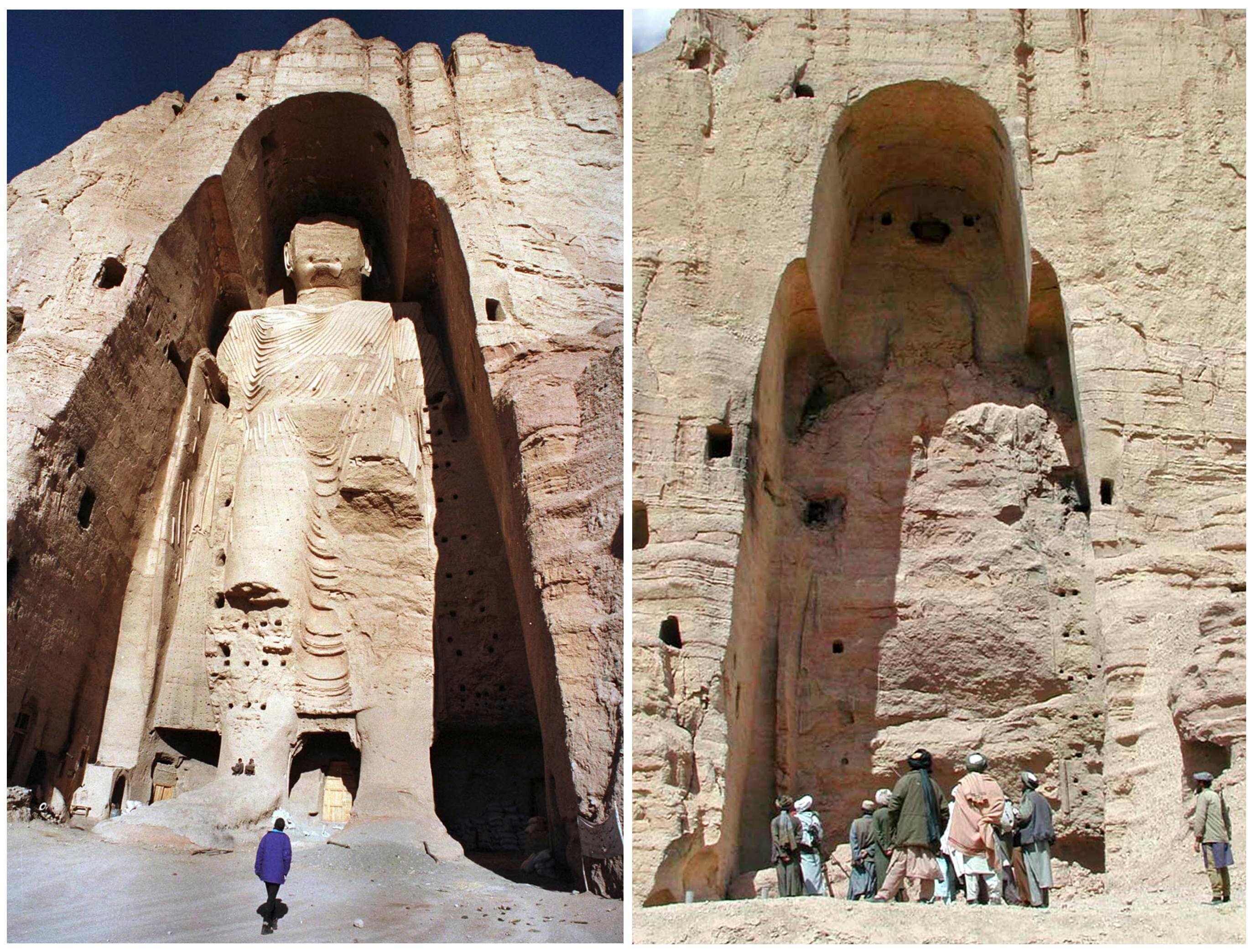 Buddha statues before and after destruction in Bamiyan
They even destroyed Buddhist art from the national museum in Kabul, basically to erase the Buddhist history. While other countries as Japan and France tried to save and reconstruct parts of the destruction in Bamiyan, even before Afghanistan itself has been trying to protect the Buddhist remains. In the 1990s objects were brought to Switzerland to save them from the Taliban and the civil war, recognising that they’re part of the countries past to be saved.
But the attempts of the democratic government from 2004-2021 were unsuccessful in many parts unfortunately. It has been decided in 2011, that the remains from Bamiyan should be portrayed in a museum, and there were other excavations in Bamiyan going on as there is a museum in Bamiyan to betray the founded objects, but with the Taliban taking over the government in 2021, they stole and sold objects from this museum, especially Buddha heads. (“Barbarischer Akt religiöser Intoleranz. Zerstörunv von Kukturstätten.” Deutschlandfunk Kultur. Web. 06 Nov 2023. [https://www.deutschlandfunkkultur.de/zerstoerung-von-kulturstaetten-barbarischer-akt-religioeser-100.html])
Clearly, the Taliban are not representatives of the country, and there have been protests by Muslims about the “destruction of culture”, as the UNESCO called it, and of course there are archeologists, museum curators, historians and more people working to preserve Buddhist object from the Taliban, even now.
Pakistans handling of the Buddhist past seems harder to approach. It doesn’t seem visible at first, as most people wouldn’t connect Pakistan with Buddhism directly, but still the legacy is visible in the country today- even after vagaries of centuries. A lot of heritage in craft, art and religious objects have been preserved and are being presented in plenty museums, which will be talked about later, and the preservation of buddhist sites and archeological excavations are still going on continuously.
Unfortunately, not only Afghanistan, but also Pakistan suffered under the Taliban. The Swat Valley as a part of Greater Gandhara and todays Pakistan is rich on buddhist carvings, statues and stupas. Sadly, the Taliban destroyed stupas and statues from the Kushan era, and even relics from the Swat Valley.
Still, despite Pakistan being an Islamic republic, they still try and want to preserve all cultural heritage and historical sites and monuments, even if they are from different faiths and religions as they see the importance of their Buddhist heritage. Therefore, they grant Buddhist visitors security to visit the sacred sites of the country- unfortunately not for the masses. (Amstutz, 2019, p. 242ff)
So concluded, Pakistan is putting a lot of effort to preserve their Buddhist heritage by doing excavations and having museums portraying the objects for example, while still suffering from the destruction of objects and sites by the Taliban, and while not actively encouraging religious tourism. People from Afghanistan on the other hand have been and are trying to preserve what they’re able to, but are suffering under the Taliban regime which is actively destroying and erasing the Buddhist past.
Gandharan Museums and collections today
Today there are museums containing objects from Gandhara handling their collections in various ways and emerging from different reasons- in Pakistan, but also of course in the rest of the world, and it’s seems worthy to have a look at those.
Gandharan Museums in Pakistan
As expected there are Gandharan Museums and collections in Pakistan itself.
The Peshawar Museum, situated in the city of Peshawar, stands as the most important and extensive repository of Gandharan artifacts in the region and globally. Originally dedicated to Queen Victoria, it was founded in 1907 with just one exhibition room focused on showcasing Gandharan sculptures from the primary excavation site in Peshawar. Over time, the museum expanded and now houses an impressive collection of 14,000 items, including sculptures, coins, and manuscripts from Gandhara that depict the unique Gandharan art of Buddhism. This encompasses representations of the life stories of Buddhas, miracles, and other Buddhist objects, as well as reliefs and statues.
In addition to its focus on the Buddhist heritage of Gandhara, the museum features Mughal and Persian Islamic Art dating back to the periods when these empires ruled over Gandhara. It also includes general cultural items from the region, offering glimpses into everyday life.
During its establishment in 1907, the museum’s curator held the position of the Superintendent of the Archaeological Survey of India. Following Pakistan’s independence and subsequent changes in 1992, the government set up its Directorate of Archaeology and Museums to preserve and protect archaeological heritage, with a specific emphasis on the Buddhist legacy of Gandhara. Consequently, the museum became an integral part of the Provincial Directorate, ensuring its ongoing role in safeguarding and showcasing the cultural richness of Gandhara. („Peshawar Museum.“ Directorate of Archeology and Museums, Khyber Pakhtunkhwa. Web. 03 Nov 2023. [https://kparchaeology.gkp.pk/peshawar_museum.php])
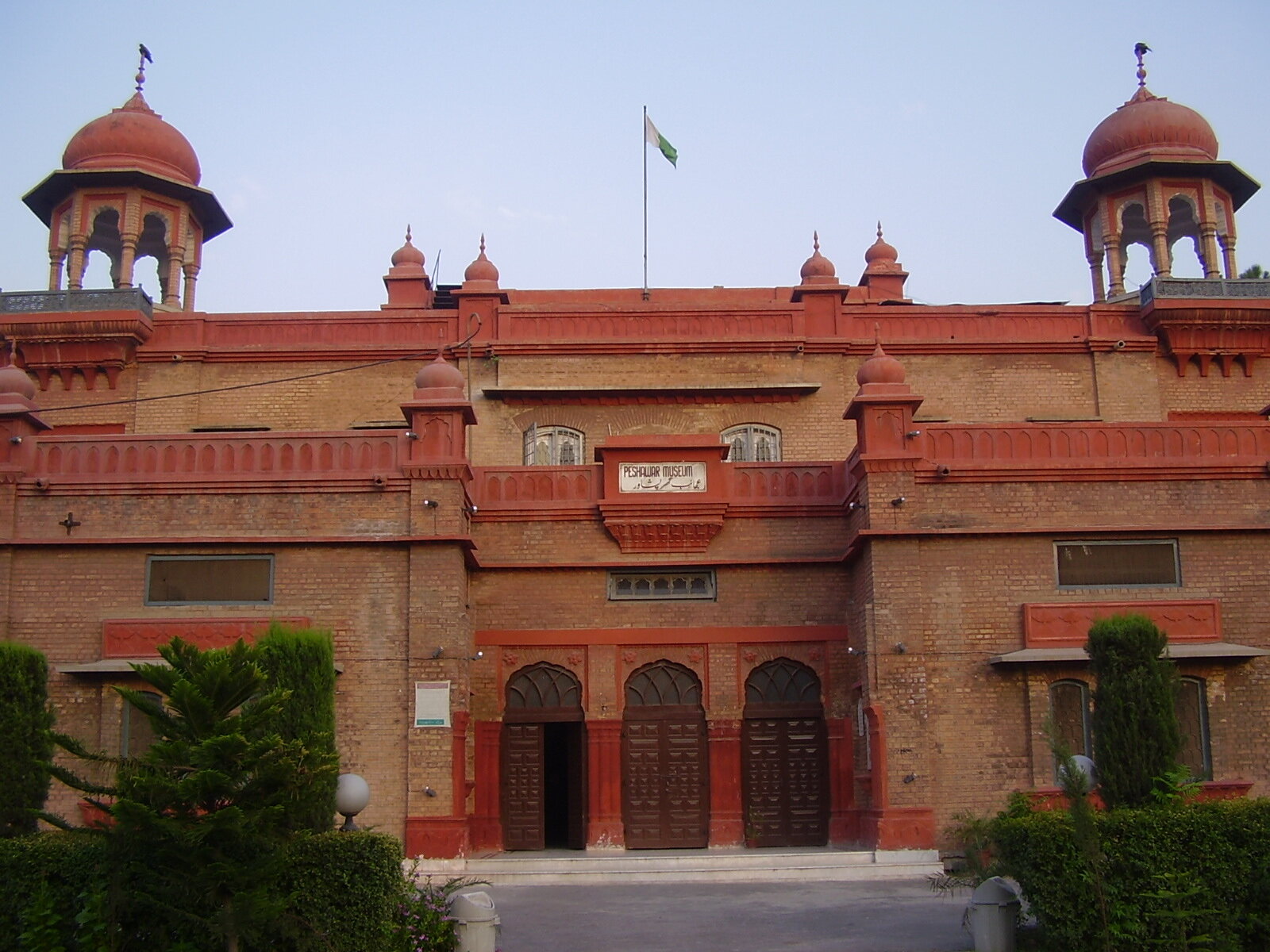 Peshawar Museum
Another crucial museum in Pakistan is the Lahore Museum located in Punjab. While the museum expresses its aspiration to become a world-class institution and emphasizes goals such as preserving Pakistan’s cultural heritage, conserving antiquities, educating the public, and promoting research on history, it is evident that it also houses a significant number of Gandharan objects, having one of the world’s most extensive collections.
A 360-degree picture on their website showcases the vast collection, providing additional information and images of significant objects. Notably, the sculpture of the Fasting Buddha, one of the most renowned Gandharan artifacts, is featured in their collection and on the website. From the online exhibition and the provided information, it is evident that the primary focus of the Lahore Museum is to educate the public about the rich Buddhist heritage, with a particular emphasis on Gandharan art. („Gandhara Gallery.“ Lahore Museum. Web. 03 Nov 2023.[https://lahoremuseum.punjab.gov.pk/taxonomy/term/10])
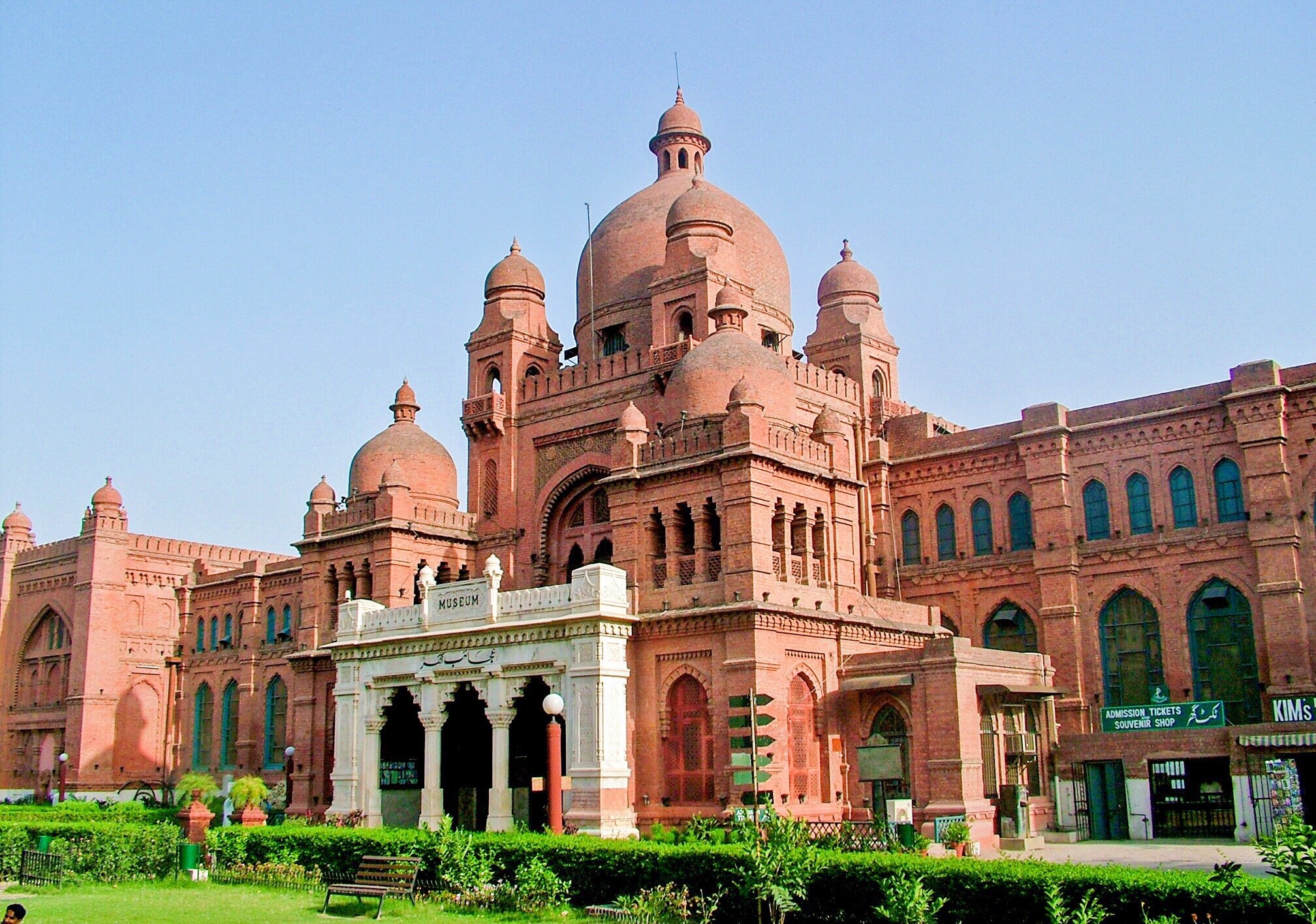
 Lahore Museum building and exhibition
Other museums in Pakistan having Gandharan artefacts are the National Museum of Pakistan, the Taxila Museum, the Islamabad Museum, the Dir Museum Chakdara, the Swat Museum and the Honde Museum
Gandharan collections worldwide
Surely interesting is to look at more museums portraying Gandhara worldwide - or to get a grasp of that to inspect a few of those.
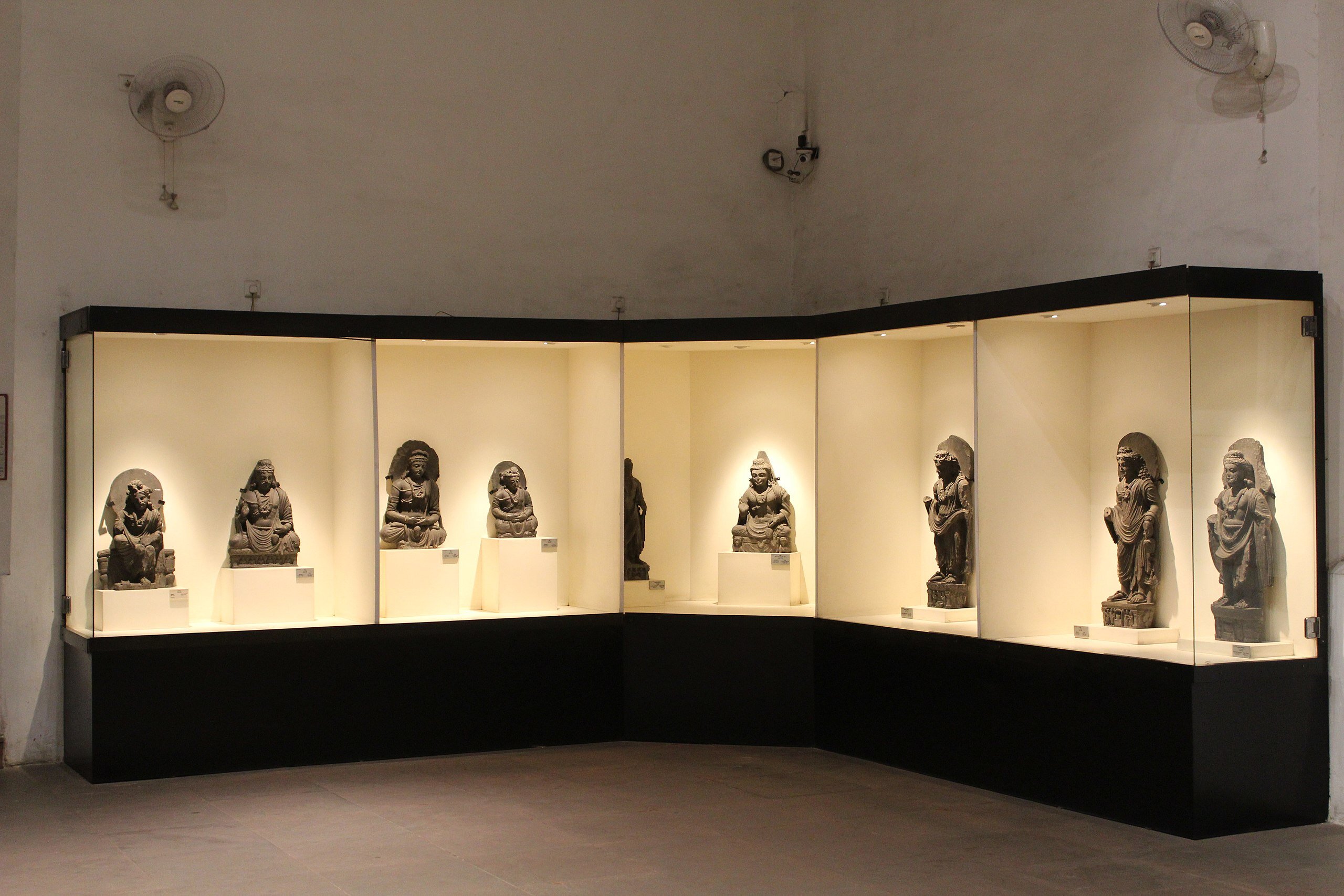
An collection of Gandharan objects can be found not far from Pakistan - namely in the Indian Museum Kolkata. The museum was founded in 1814, and is not only Indians oldest, but also the most multi diverse museum. At the foundation, interesting and curious objects were collected from all over India to be part of the exhibition. Today it has three main sections - Art, Archeology and Anthropology. The website shows a picture of the area in the museum dedicated to Gandhara, and it is about 25 objects showing significant events of the Buddhas life. The museum states, that they’re representing those to show the influence of Greek Culture on the indigenous Buddhist art from Gandhara. More detailed information about the objects isn’t given. (“Gandhara Gallery.” Indian museum Kolkata. Web. 03 Nov 2023. [https://indianmuseumkolkata.org/gallery/gandhara-gallery/])
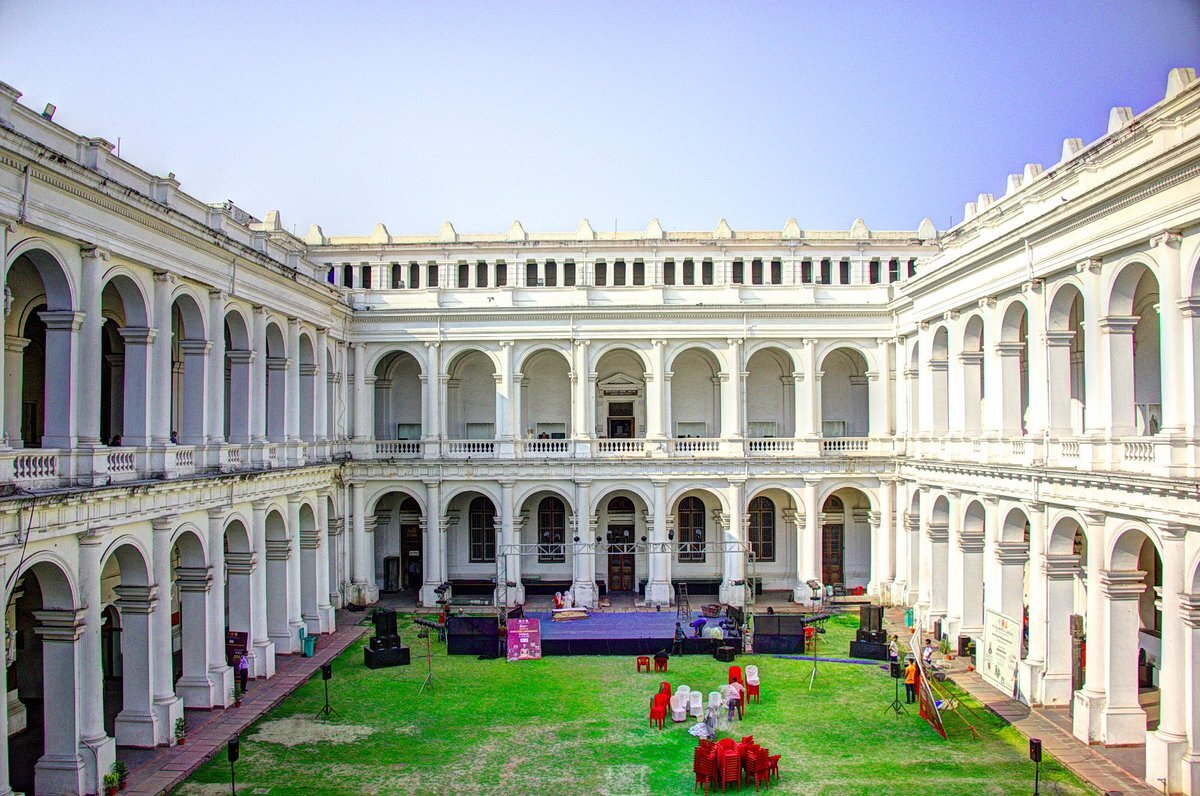 Indian Museum Kolkata
The Museum für Asiatische Kunst in Berlin, Germany hosts 20.000 objects and art objects from, South- Southeast and Central Asia, and it is one of the most important exhibition of its kind. Originally, it were two separated museums - the museum of East Asian Art founded in 1906, - and the museum for Indian Arts, which were combined in 2006 and are now part of the Humboldt Forum. The objects state from the 3rd century B.C up to today and are of various kind, though the focus lies on South and Southeast Asian sculptures. As especially important listed is the Gandharan collection with objects from 1st-5th A.C from Afghanistan and Pakistan. (“Kunstsammlung Süd-, Südost- und Zentralasien.“ Museum für Asiatische Kunst. Web 03 Nov 2023. [https://www.smb.museum/museen-einrichtungen/museum-fuer-asiatische-kunst/sammeln-forschen/sammlung/kunstsammlung-sued-suedost-und-zentralasien/]) The objects have been digitalised and can be found online. (“Stehender Bodhisattva.“ Museum für Asiatische Kunst. Web 03 Nov 2023. [https://smb.museum-digital.de/object/63451])
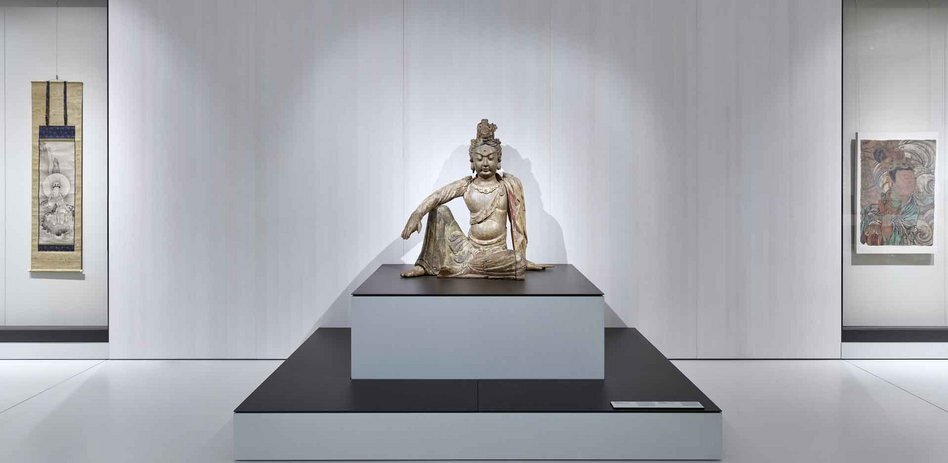 Museum für Asiatische Kunst Berlin
An extraordinary exhibition has just been opened in 2023 in Beijing, China and is definitely worth looking at. It is portrayed in the Palace Museum in Beijing in corporation with the Department of Archeology and Museums at the National Heritage and Culture Division of Pakistan, and it is the largest ever held exhibition in China about Gandhara, with the goal to educate and connect about the long history of Chinese-Pakistani exchanges along the Silk Road, as the name indicates: the Gandhara heritage along the Silk Road: A Pakistan-China Joint Exhibition. It is also suppose to not only promote the shared Buddhist heritage, as the silk road going through Gandhara played a major part in introducing Buddhism to China, but to strengthen future relations, as it has been said at the opening prior this year. The museum itself held 30 objects, and the exhibition was added by 173 objects unearthed by archeological excavations from the 2nd century B.C to the 10th century A.D, coming from seven different museums in Pakistan, those who were already listed above. („Largest Gandharavart exhibition unveiled at Palace Museum, showcasing long history of China Pakistan exchanges along Silk Road.“) Lin Xiaoyi. Global Times. Web. 03 Nov 2023. [https://www.globaltimes.cn/page/202303/1287410.shtml])
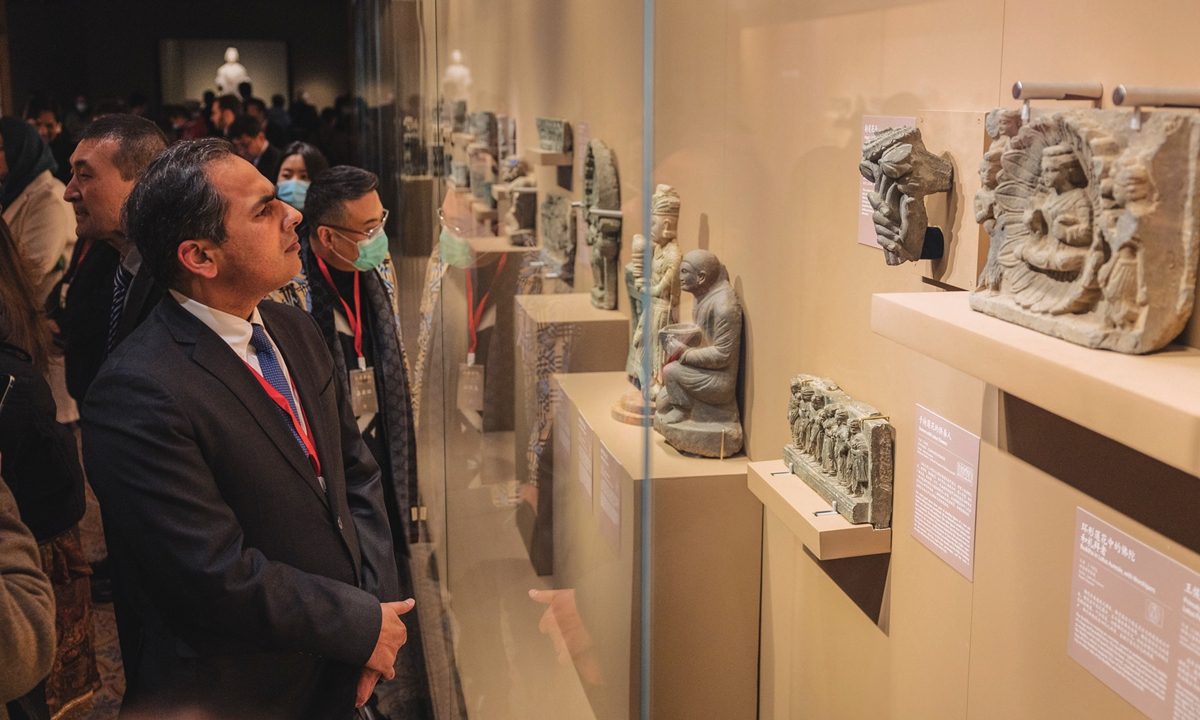 Palace Museum Beijing
As it can be seen already, there are plenty museums who hold Gandharan objects - famous museums such as the Metropolitan museum, the British museum, the Ashmolean museum in Oxford, - but also small and not world widely known ones as the Museum DKM in Duisburg, Germany, the Astamangala Gallery in the Netherlands, or being the best example: Das Forum der Völker in Werl. So even though Gandhara is not something everyone knows of and something everyone looks out for in museums - it is there and it is more represented than it seems if you keep an eye out for it.
Still, it is worthy to say that the museum in Werl is special on this list, since it emerged from missiomaries collecting items on their missions in foreigh countries, origianlly serving different purposes than most of the other here listed museums.